**Click here to find your perfect jewellery gift in less than 15 seconds & SAVE 5%**


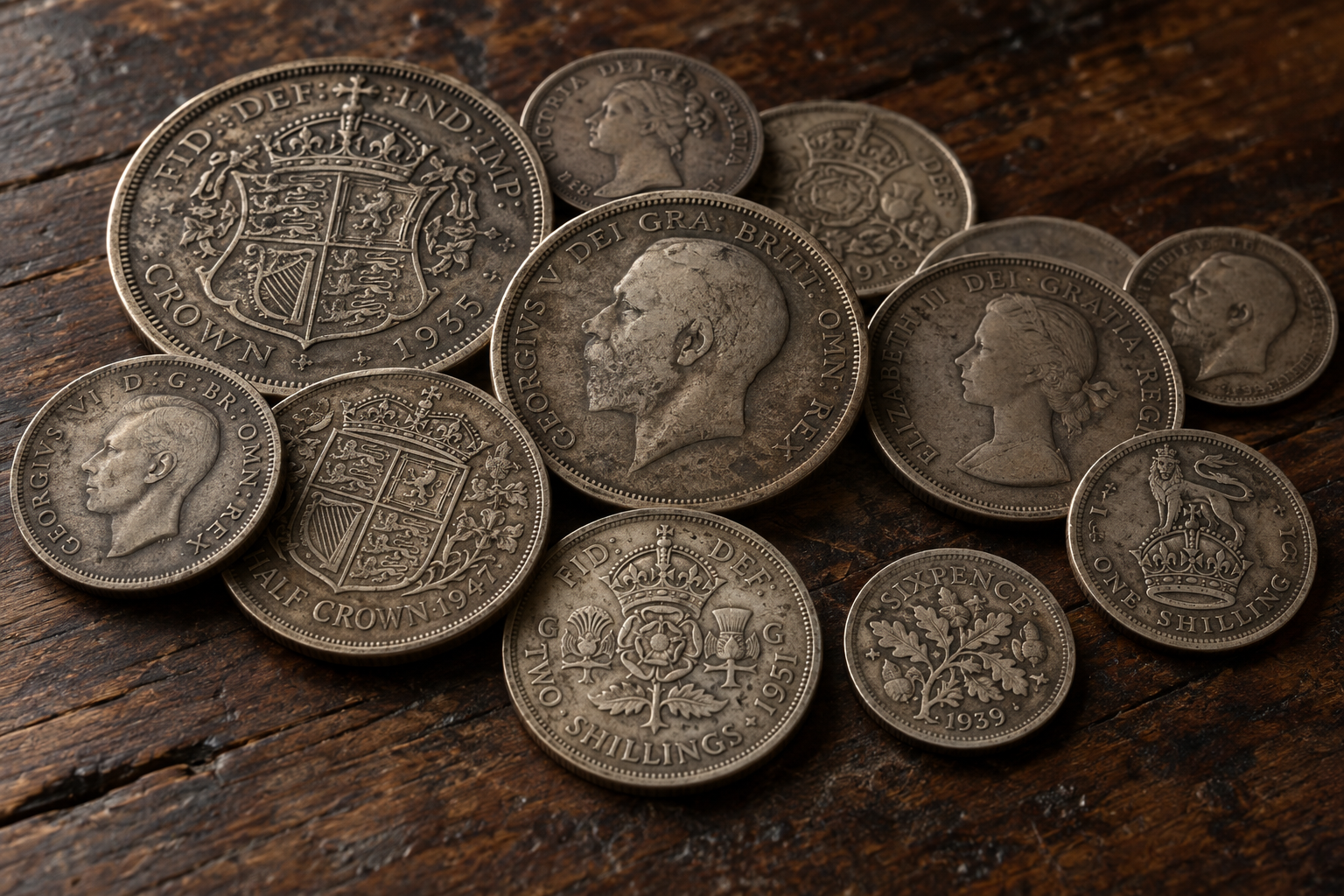
Found an old sixpence, shilling or half crown in a drawer and wondered whether it is real silver? Choose the coin, type the year, and this checker tells you what it is made of, how fine the silver is and how much pure silver it holds.
Which British coins are silver?
British coins dated 1919 or earlier are sterling silver (.925). Coins dated 1920 to 1946 are 50% silver (.500). From 1947, sixpences, shillings, florins and half crowns were made from cupro-nickel and contain no silver.
UK silver coin fineness by date
Check the below table for a detailed breakdown of the coin fineness by date:
| Date on coin | Metal | Fineness |
|---|---|---|
| 1816 to 1919 | Sterling silver (92.5% silver) | .925 |
| 1920 to 1946 | Half silver (50% silver) | .500 |
| 1947 onwards | Cupro-nickel (75% copper, 25% nickel) | No silver |
| Maundy sets, 1947 onwards | Sterling silver | .925 |
How much silver is in each old British coin?
Standard weights have not changed since 1816, so the pure silver content only depends on the fineness. These figures are for standard circulating coins.
| Coin | Weight | Pure silver at .925 | Pure silver at .500 |
|---|---|---|---|
| Crown | 28.28 g | 26.16 g | 14.14 g |
| Half crown | 14.14 g | 13.08 g | 7.07 g |
| Florin (two shillings) | 11.31 g | 10.46 g | 5.66 g |
| Shilling | 5.66 g | 5.23 g | 2.83 g |
| Sixpence | 2.83 g | 2.62 g | 1.41 g |
| Threepence (small, round) | 1.41 g | 1.31 g | 0.71 g |
How can I tell if my old coin is silver?
- Read the date. It is the best clue you have. Use the table above or the checker.
- Identify the coin. Silver-era coins carry the portrait of Victoria, Edward VII, George V or George VI.
- Weigh it. A standard sixpence weighs 2.83 g. Check our UK Coin Weight Calculator for the rest.
- Contact an expert if you are unsure. A coin dealer can test a coin and confirm its silver content.
Frequently asked questions
Is a 1946 sixpence silver?
Yes. Sixpences dated 1946 are 50% silver (.500). It was the last year the Royal Mint made sixpences, shillings, florins and half crowns in silver for everyday use.
Is a 1947 sixpence silver?
No. From 1947 these coins were made from cupro-nickel, an alloy of 75% copper and 25% nickel, so they contain no silver. The same applies to 1947 and later shillings, florins and half crowns.
Are coins dated 1920 silver?
Yes. Most coins dated 1920 are 50% silver (.500), because the Royal Mint cut the silver content that year, although some were still struck in sterling (.925). Either way they contain silver.
Why did Britain stop using silver in its coins?
Silver became too expensive to keep in everyday coinage. The fineness was cut from .925 to .500 in 1920, and silver was removed altogether from 1947. The post-war switch is also linked to Britain returning silver it had borrowed from the United States during the Second World War.
Does a magnet tell me if a coin is silver?
Not really. Silver, cupro-nickel and bronze are all non-magnetic, so a magnet cannot separate a silver sixpence from a cupro-nickel one. The date is the most reliable clue.
Is my silver coin worth more than its silver content?
Often the silver is worth only a small amount, because a sixpence holds about 1.4 g of pure silver at best. Scarce dates and coins in good condition can be worth much more to collectors. Our UK Coin Rarity Checker can help you spot a documented rarity.
Are British decimal coins silver?
No. Circulating decimal coins from 1p to £2 have never been made in silver. Silver versions, such as proof coins and the Britannia bullion coin, are sold separately as collector or investment pieces and are marked as silver.
Are Maundy coins silver?
Yes. Maundy money, given out by the monarch each year, was returned to sterling silver (.925) in 1947 when everyday coins stopped using silver. If your small coin came in a Maundy set, treat it as silver.
Does silver content matter for coin jewellery?
Most people choose a coin for the year on it, not the metal. A sixpence from the year someone was born carries the same meaning whether it is half silver or cupro-nickel. Browse our coin jewellery by year to find yours.
Fineness bands follow the Royal Mint’s coinage standards: sterling (.925) from the 1816 recoinage, 50% silver from 1920, and cupro-nickel from 1947. Figures are for standard circulating coins. Proof, commemorative, Maundy and bullion issues can differ. This tool is a guide and not an assay or a valuation.
Turn a special year into something the perfect gift
Every piece we make starts with a genuine coin from the year that matters to you, whether it is a birth year, a wedding or a milestone. The metal is only part of the story. The year is what makes it personal.