**Click here to find your perfect jewellery gift in less than 15 seconds & SAVE 5%**



2011 Olympic Football 50p Coin Guide: Value, Mintage, and How to Spot a Fake
There’s a thrill that every collector knows: that is the moment you check your pocket change and a rare design catches your eye. For those collecting British coins, especially sports fans, one piece stands out in general circulation: the 2011 Olympic Football 50p coin.
This coin is officially the rarest circulating piece from the entire London 2012 collection, affectionately known to many as the ‘Offside Rule 50p’ thanks to its clever, distinctive design. Its appeal comes from the perfect storm of celebrating the nation’s most loved sport and having a notoriously low mintage figure, making it the holy grail for coin enthusiasts and football aficionados hunting in the wild.
Whether your mission is to complete your Olympic set or you’ve just stumbled upon one and need to know its current ‘Offside Rule 50p’ valuation and the official mintage statistics, this is your resource. In this expert breakdown, we will cover every detail you need to understand this highly sought-after fifty-pence piece.
Discover the top 10 rarest 50p coins in the UK.
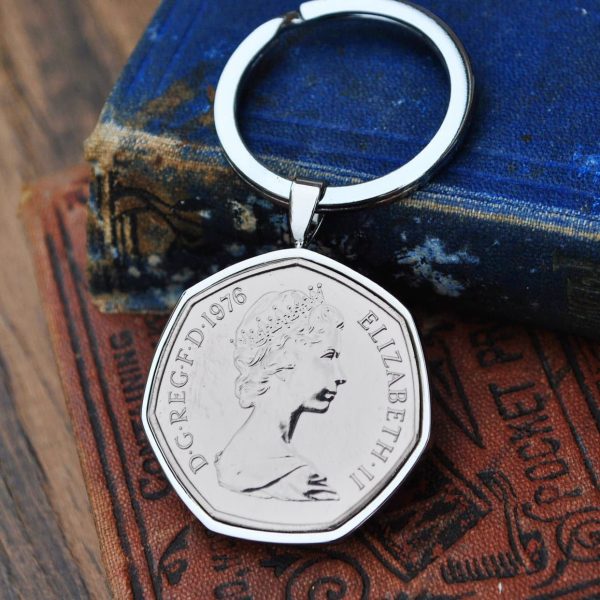
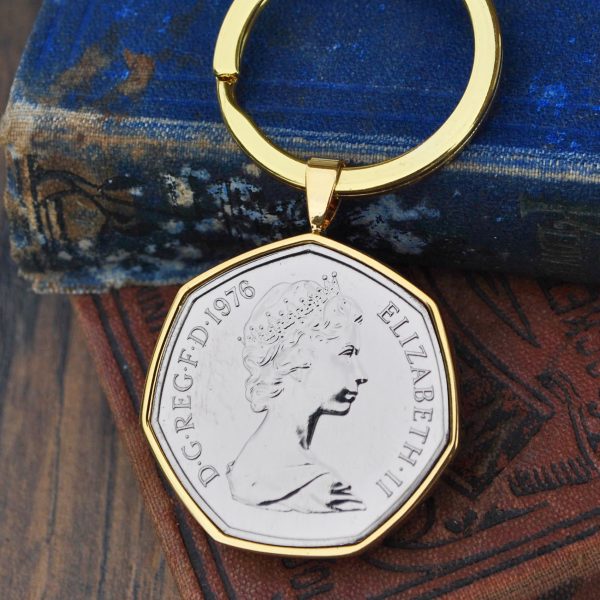
Love a 50p? Turn one into a keepsake.
What is the 2011 Olympic Football 50p Coin?
To celebrate the monumental London 2012 Olympic and Paralympic Games, The Royal Mint launched an ambitious initiative that profoundly impacted British coin collecting. This involved releasing a 29-coin series of fifty pence pieces, with each coin uniquely dedicated to a different sporting discipline.
To make the series truly reflect the spirit of the nation, The Royal Mint opened the design process to the British public. Over 30,000 entries were submitted, and 29 winners were selected to have their artwork struck onto the nation’s currency.
When it came to football, undoubtedly the most passionately followed sport in the United Kingdom, the anticipation for the coin’s release was understandably sky-high. Football has been a core Olympic sport since 1900, but translating the beautiful game onto a small, seven-sided piece of cupronickel required genuine creativity. The resulting 2011 Olympic Football 50p coin did not just meet expectations; it completely subverted them, delivering a playful and educational design that instantly secured its place in numismatic history.
2011 Olympic Football 50p Value: How Much is the ‘Offside Rule’ Coin Worth?
When it comes to financial value, the “Offside Rule” 50p coin is a heavyweight in the world of modern fifty pence pieces. Because it holds the title of the rarest sports 50p, its market price has remained remarkably resilient and continues to climb as more collectors remove them from circulation.
If you are lucky enough to have one in your possession, here is a breakdown of the current offside rule 50p value:
- Circulated Condition: Even a coin that has spent over a decade passing through tills and pockets is highly valuable. A genuine circulated Olympic Football 50p typically commands between £10 and £15. This represents an incredible 20 to 30 times its face value, making it one of the best “pocket change” finds in the UK.
- Brilliant Uncirculated (BU) Condition: For those who own a coin in its original Royal Mint presentation pack, the value jumps significantly. These pristine examples, which have never been handled or exposed to the elements, regularly sell for £20 to £30, depending on the condition of the card.
- Silver Proof Edition: The Royal Mint also produced a limited number of Silver Proof versions for serious investors. These high-finish coins are struck in .925 sterling silver and often fetch upwards of £50 to £70 at specialist auctions.
As with all rare coins, the value is heavily influenced by “eye appeal.” Coins with fewer scratches and a brighter lustre will always sit at the top end of these price brackets.
What is the Design of the 2011 Olympic Football 50p Coin?
The obverse (the ‘heads’ side) of the coin features the classic fourth coinage portrait of Her Late Majesty Queen Elizabeth II by Ian Rank-Broadley. While this side is standard for the 2011 series, the reverse (the ‘tails’ side) is anything but ordinary. It is widely considered one of the most innovative and functional designs ever to appear on a British coin.
The artwork was the brainchild of Neil Wolfson, a sports journalist who understood that for many, the “beautiful game” is often marred by confusion over its most controversial law. Rather than depicting a footballer mid-kick or a goalpost, Wolfson decided to use the 27.3mm canvas to solve an age-old debate.
His design is a top-down tactical diagram of a football pitch. Using a series of triangles and squares to represent players from opposing teams, the coin clearly illustrates a specific match scenario to determine whether a player is in an offside position. The genius of the design lies in its simplicity; it is essentially a portable rulebook that fits in the palm of your hand.
Neil Wolfson’s ‘Offside Explained’ Reverse Side Diagram
The reverse design is meticulously detailed. To the left of the central players, the coin features a clear labels section with the words “OFFSIDE” and “NOT OFFSIDE” aligned with the relevant zones of the pitch. At the very top, the phrase “OFFSIDE EXPLAINED” is inscribed in a bold, clean font.
The London 2012 Olympic logo sits prominently at the top right, and the denomination “50 PENCE” is centered at the bottom. The level of precision required to mint such small text and fine tactical lines is extraordinary.
At Heads and Tails Jewellery, we have a deep appreciation for this kind of technical mastery, the same level of detail we strive for when personalising and engraving our bespoke coin jewellery.
How Rare is the 2011 Olympic Football 50p Coin?
When discussing the true hierarchy of British coinage, the Olympic Football 50p mintage figures confirm its status as a premier rarity. While many of the 2011 sports designs were produced in quantities exceeding two million, the “Offside Rule” coin was subject to a significantly more restricted production run.
The Royal Mint has confirmed that the official circulating mintage for the Football 50p is just 1,125,500.
To put this in perspective, this makes it officially the rarest coin in the entire 25-piece Olympic series, even scarcer than the highly sought-after Wrestling and Judo designs. In the broader landscape of UK coinage, it consistently ranks within the top ten rarest 50p coins ever to enter general circulation.
Because of its unique educational design and its status as the “number one” Olympic rarity, collectors have historically been very quick to pull these coins out of their change. Experts estimate that a vast majority of the original mintage is now held in private collections, making a “wild” find in 2026 an increasingly rare and celebrated event for any coin hunter.
How to Spot a Fake 2011 Olympic Football 50p Coin
Given that the Football 50p can command up to 30 times its face value, it is unfortunately a frequent target for counterfeiters. The secondary market, particularly online marketplaces, can sometimes harbour sophisticated replicas. If you are looking to verify an “Offside Rule” coin, keep these expert tips in mind:
- The Precision of the Text: The most common giveaway on a forged Football 50p is the quality of the tiny lettering. On a genuine Royal Mint coin, the words “OFFSIDE EXPLAINED” and the labels for “OFFSIDE” and “NOT OFFSIDE” are incredibly crisp and legible, even without a magnifying glass. Fakes often have “mushy” or blurred text where the letters seem to bleed into the background.
- The Weight Check: Every genuine UK 50p is struck to an exacting standard of 8.00g. Counterfeiters often use cheaper lead-based alloys or different bimetallic compositions that result in a coin that is noticeably lighter or heavier. Using a digital pocket scale is the single most reliable way to authenticate your find.
- The Detail of the Logo: Examine the London 2012 Olympic logo in the top right corner. On a genuine piece, the geometric lines and the Olympic rings are sharp and perfectly defined. On forgeries, these details often appear rounded or lack the “strike” depth of an official coin.
- The IRB Initials: Just like the Kew Gardens and Wrestling coins, always check the base of the Queen’s neck on the obverse. The designer’s initials, ‘IRB’, should be clear and finely engraved. If they are missing, oversized, or look like they have been “blobbed” on, the coin is likely a counterfeit.
Transforming Rare Coins into Timeless Jewellery
At Heads and Tails Jewellery, we believe in bringing history to life. As specialists in numismatic craftsmanship, we transform beautiful coins into high-end, bespoke jewellery that allows you to carry your passion with you.
While the “Offside Rule” 50p is a fantastic piece of sporting history, our jewellery is exclusively crafted using a curated selection of readily available and common coins. We focus on celebrating the artistry of these everyday coins, preserving their design in a way that can be enjoyed every single day.
Imagine gifting a pair of luxury coin cufflinks, or carrying a distinctive coin keyring as a functional piece of art on your daily travels. Each piece we create is a tribute to the craftsmanship of the original design, made wearable for any occasion. Shop the perfect gift today.
Handmade in the UK · 8,000+ five-star reviews
Love a 50p? Turn one into a keepsake
We make genuine fifty pence coins into keyrings, necklaces and cufflinks.